-
WhatsApp / Mob : +86 156 5177 2521
-
e-mail : mrwin@cnbangwin.com
WhatsApp / Mob : +86 156 5177 2521
e-mail : mrwin@cnbangwin.com

categorie
ultimo blog
tag
Liquid Nitrogen Manufacturing Process: Complete Industrial Guide to LN2 Production
Jul 08 , 2026
Liquid nitrogen is used in many industries for the purposes of cooling, freezing, and inerting. So, having knowledge of Liquid Nitrogen Manufacturing Process leads businesses to opt a right production unit.
Cryogenic air separation technology is what modern liquid nitrogen, plants utilize. In addition, they offer a continuous production with large throughput with high purity and stability.
In line with industrial demand and investment, several companies are investing in on-site liquid nitrogen manufacturing systems. As a result, they decrease supply prices and enhance operational autonomy.
In the case of liquid nitrogen, the entire production process for nitrogen in our atmosphere can be referred to as a Liquid Nitrogen Manufacturing Process.
It involves compressing, purifying, cooling (the air) separating and liquefying the gas.
As air consists of roughly 78% nitrogen, manufacturers obtain it by means of cryogenic technology. After that, they freeze nitrogen to - 196 C making it liquid.
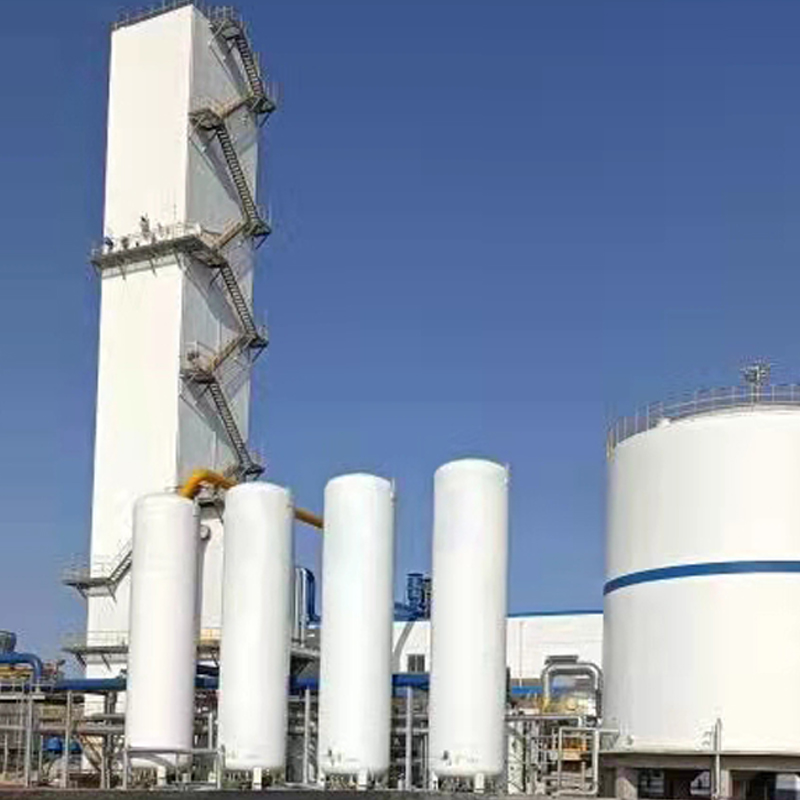
l Cryogenic Air Separation Plant
l Air Separation Unit
l Cryogenic Air Separation Equipment
Liquid nitrogen is an important liquid used in contemporary industry.
First, it enables rapid cooling.
Furthermore it saves biological and food materials.
It also safeguards against oxidation as the manufacturing process to occur.
Liquid nitrogen also provides necessary assistance in science and medical fields as well.
This makes practice up-to-date manufacturing systems for mechanical steady-state very important.
Liquid Nitrogen Manufacturing Process involves multiple continuous processes.
Step 1. Air Intake
That atmospheric air is sucked into the compressor by the system.
Next, intake filters prevent dust and large contlnue reading.
This is where then, equipment protection starts from.
Step 2. Air Compression
After, it puts air under pressure in a compressor.
Heat transfer efficiency increases with higher pressure.
In addition, new compressors save energy.
Step 3. Air Purification
Now the compressed air enters in purification units.
These units remove:
l Moisture
l Carbon dioxide
l Oil vapor
l Hydrocarbons
l Dust particles
As a result we can ensure cryogenic equipment wont freeze up and cause us any damage
Step 4. Heat Exchange
Afterwards, the clean air travels through plate-fin heat exchangers.
Cold gas exiting cools the incoming air.
So the system retrieve refrigeration energy.
Consequently, energy efficiency improves significantly.
Step 5. Cryogenic Separation
Air enters the distillation column after being cooled.
Inside the column:
l Nitrogen rises upward
l Oxygen settles at the bottom
l Argon remains in the middle
Hence the gas separation in continuous mode.
Step 6. Nitrogen Liquefaction
The nitrogen, which is now purified, continues to cool at -196°C.
After that, it changes into liquid nitrogen.
Lastly, it goes into insulated storage tanks.
This stage finalizes the process of Liquid Nitrogen Manufacturing Process.
A full system comprises a few essential components.
Air Compressor
The compressor supplies pressurized air.
Therefore, it determines system capacity.
Air Purification System
This system removes contaminants.
Consequently, it guarantees a reliable performance.
Plate-Fin Heat Exchanger
The exchanger improves energy recovery.
Moreover, it reduces operating costs.
Expansion Turbine
The turbine generates cryogenic cooling.
Therefore, nitrogen reaches liquefaction temperature.
Cryogenic Distillation Column
Separates nitrogen from oxygen in a column
So it is the heart of the system.
Liquid Nitrogen Storage Tank
LN2 is stabilized by the storage tank.
Moreover, insulation reduces evaporation losses.
l Cryogenic Air Separation Equipment
l Liquid Oxygen Plant
l LCO2 Storage Tank
l Industrial Gas Plant
Cryogenic technology is still the most trusted approach to make nitrogen.
It provides: Compared with other systems
l High nitrogen purity
l Continuous operation
l Large-scale production
l Oxygen and argon co-production
l Long-term energy efficiency
This is why cryogenic units are a common practice at all industrial plants.
Several factors influence production performance.
Air Quality
Cleaner air improves system stability.
Compressor Efficiency
Efficient compressors reduce electricity usage.
Heat Exchange Performance
Better heat recovery increases efficiency.
Distillation Design
Optimized columns improve nitrogen purity.
Automation System
PLC control improves operational stability.
So, the quality of equipment directly impacts cost and yield.
Liquid Nitrogen Manufacturing Process: Introduction to Supply in Numerous Industries
Food Industry
Application — Used in Flash Freezing and Preservation
Healthcare
Cryogenic storage of biological samples.
Pharmaceuticals
Utilised for preservation of vaccine and medicine
Electronics
Used for cooling sensitive components.
Chemical Industry
Used for inerting and protection.
Research Laboratories
Used for cryogenic experiments.
l Industrial Gas Plant
|
Feature |
Liquid Nitrogen Manufacturing Process |
PSA Nitrogen System |
|
Product |
Liquid Nitrogen |
Gaseous Nitrogen |
|
Purity |
Very High |
High |
|
Capacity |
Medium–Large |
Small–Medium |
|
Cost |
Higher |
Lower |
|
Storage |
Very Efficient |
Less Efficient |
|
Cryogenic Use |
Excellent |
Not Suitable |
Several factors require evaluation.
First, determine daily nitrogen demand.
Next, define purity requirements.
Moreover, consider installation space.
Furthermore, evaluate energy consumption.
Last, Toolingup as a professional manufacturer that has good engineering strength.
Nanjing Bangwin Gas is a specialized manufacturer of industrial gas systems.
Official Website:
The company provides:
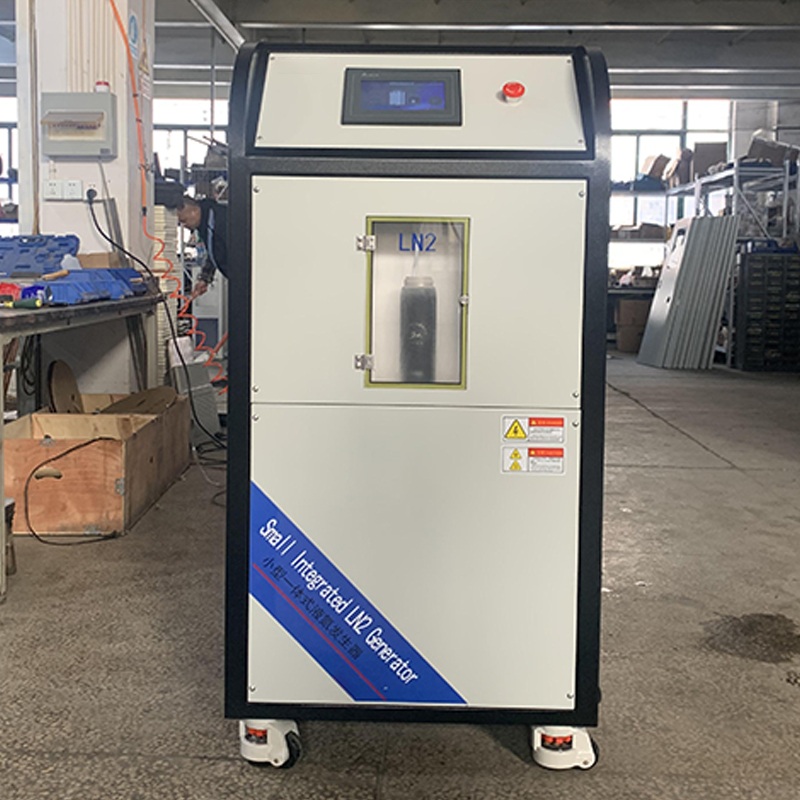
l Liquid Nitrogen Plant
l Cryogenic Air Separation Plant
l PSA Nitrogen Generator
l PSA Oxygen Generator
l Liquid Oxygen Plant
Additionally, the company provides bespoke engineering solutions.
It provides installation guidance and technical support, even worldwide.
Because of this, it gives customers fixed as well as effective gas manufacturing systems.
For storage systems and cylinders:
https://bangwingascylinder.com/
l What is the liquid nitrogen manufacturing process?
It is the industrial process of producing liquid nitrogen from air through cryogenic separation and liquefaction.
l What temperature is needed for liquid nitrogen?
Nitrogen liquefies at approximately -196°C.
l What industries use liquid nitrogen manufacturing systems?
Food, healthcare, electronics, pharmaceuticals, chemicals, and research industries.
l Is cryogenic manufacturing better than PSA?
Yes, for liquid nitrogen production, cryogenic systems are more suitable.
l Who manufactures liquid nitrogen plants?
Nanjing Bangwin Gas designs and supplies customized industrial gas production systems worldwide.
Introduction to Liquid Nitrogen Manufacturing Process that establishes cryogenic technology which will serve as a reliable process of generating high-purity liquid nitrogen.
Furthermore, it guarantees satisfactory provision, elevated productivity and prolonged cost savings. For this reason, industries further deploy on-site manufacturing systems.
Nanjing Bangwin Gas provides advanced cryogenic equipment, customized engineering and professional global technical support based on international standards.
We are featured on bangwingas.com, learn more on the industrial gas janberra 2023 solutions that available at: Bangwi Gas.



 IPv6 rete supportata